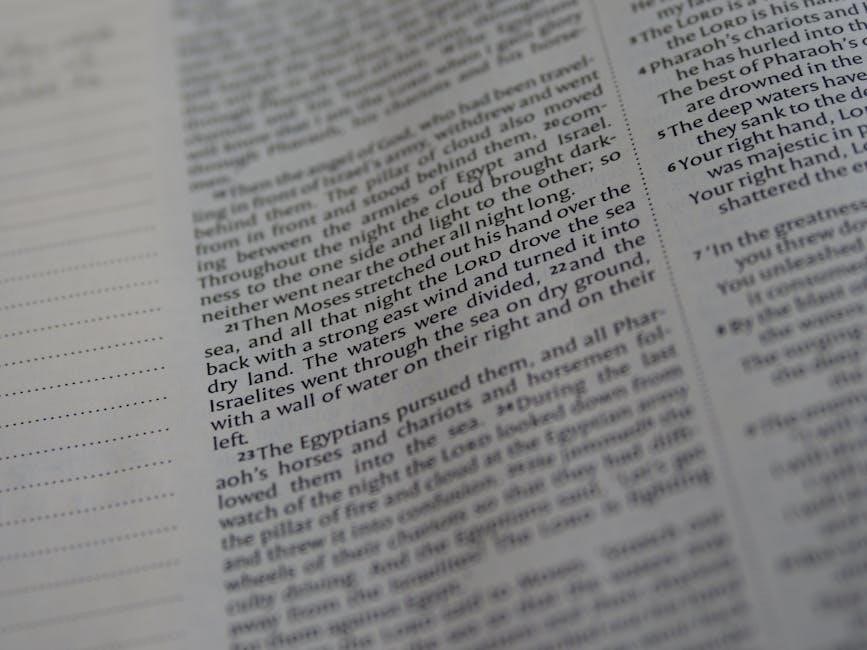
The Testament of Moses: An Overview & Digital Access (PDF)
The Testament of Moses, a fascinating ancient Jewish religious work, offers unique perspectives. Digital copies, often in PDF format, are readily available online for scholarly study and personal enrichment.
What is the Testament of Moses?
The Testament of Moses is an ancient Jewish religious work, not included in the canonical biblical texts. It’s categorized as part of the Old Testament Pseudepigrapha – writings attributed to biblical figures but not accepted into the official scriptures. This text presents itself as Moses’ final instructions and prophecies to the Israelites before his death, detailing events from creation through his own passing.
Often found as a PDF document for ease of access, it expands upon narratives found in the Book of Exodus and Deuteronomy. It delves into themes of obedience, covenant, and foreshadowing of future events. Scholars believe it was likely composed between the 1st and 2nd centuries CE, offering insights into Jewish thought during that period.
Historical Context & Origins
The Testament of Moses emerged from a complex historical backdrop of Second Temple Judaism. While the exact origins remain debated, scholars place its composition likely between the 1st and 2nd centuries CE, a period of significant religious and political upheaval. This era witnessed the rise of Christianity and evolving interpretations of Jewish law and prophecy.
The text reflects influences from various Jewish traditions, including apocalyptic literature and interpretations of the Pentateuch. Accessing the work today is often facilitated through PDF versions of ancient manuscripts and modern translations. Understanding its historical context is crucial for interpreting its theological themes and literary style, offering a window into the beliefs of its time.
Authorship and Dating
Determining the authorship of The Testament of Moses presents a scholarly challenge, as it’s considered pseudepigraphal – falsely attributed to Moses himself. It wasn’t directly penned by the biblical figure. Scholars believe an unknown Jewish author, or authors, composed the work, drawing upon existing traditions and theological currents.
Dating the text is equally complex. Most scholars suggest a timeframe between the late 1st century and early 2nd century CE, based on linguistic features and allusions to historical events. Modern readers often encounter the text through readily available PDF copies of various translations, aiding research into its origins and evolution.
Genre and Literary Style
The Testament of Moses blends several literary genres, primarily apocalyptic literature and testamentary literature. Apocalyptic elements feature visions and revelations, while the testamentary form presents final instructions and blessings attributed to a patriarch – in this case, Moses. The work also incorporates elements of midrash, expanding upon biblical narratives.
Its style is characterized by vivid imagery, symbolic language, and a focus on moral exhortation. Accessing the text via PDF versions reveals a narrative structure that alternates between biographical accounts and prophetic pronouncements. Scholars analyze these stylistic features to understand the author’s intent and the text’s intended audience.

Content and Key Themes
The Testament of Moses, often found in PDF form, details Moses’ life, prophecies, and the importance of adhering to God’s laws for future generations.
Moses’ Early Life and Divine Calling
The Testament of Moses, accessible in PDF versions, elaborates on Moses’ birth and upbringing within the context of Pharaoh’s decree against Hebrew infants. It details his miraculous rescue by his mother and subsequent adoption into the Egyptian royal family, highlighting the divine providence at play.
The text then focuses on Moses’ growing awareness of his Hebrew identity and his eventual decision to intervene on behalf of his people, leading to his flight to Midian. Crucially, the PDF versions showcase the pivotal moment of his calling at the burning bush, where God reveals His name and commissions Moses to lead the Israelites out of Egypt. This divine encounter forms the cornerstone of Moses’ prophetic mission, as presented within the testament.
The Plagues of Egypt – A Detailed Account
The Testament of Moses, often found in PDF format for convenient study, provides a remarkably detailed recounting of the ten plagues inflicted upon Egypt. These aren’t simply listed; the text delves into the specific horrors of each plague – from the turning of the Nile to blood, to the swarms of insects and the devastating loss of livestock.
PDF versions reveal how the narrative emphasizes the escalating intensity of the plagues, directly correlating with Pharaoh’s stubborn refusal to release the Israelites. The testament portrays these events not merely as acts of divine punishment, but as demonstrations of God’s power over Egyptian deities, ultimately compelling Pharaoh to yield and allow the Exodus to commence.
The Exodus and Wilderness Wanderings
The Testament of Moses, accessible in numerous PDF versions online, meticulously details the Israelites’ journey following their liberation from Egypt. Beyond the miraculous crossing of the Red Sea, the text elaborates on the challenges faced during their forty years of wandering in the wilderness.
PDF analyses reveal a focus on the Israelites’ struggles with faith, obedience, and the temptations of idolatry. The narrative highlights Moses’ role as mediator between God and his people, constantly interceding on their behalf. These digital copies showcase the detailed descriptions of the manna from heaven, the water from the rock, and the constant need for divine guidance throughout their arduous trek towards the Promised Land.
Moses’ Interactions with God
The Testament of Moses, widely available as a PDF download, profoundly emphasizes the intimate relationship between Moses and the Divine. These digital texts reveal numerous instances of direct communication, showcasing Moses as a uniquely favored prophet.
PDF versions highlight dialogues where Moses pleads for his people, receives instructions for building the Tabernacle, and seeks clarification on God’s laws. The text details visions and encounters on Mount Sinai, underscoring the awe-inspiring power and unwavering justice of God. Scholars analyzing these PDF copies note the consistent portrayal of Moses as a humble servant, faithfully relaying God’s will despite personal hardship and the Israelites’ frequent disobedience.
The Giving of the Law (Ten Commandments)
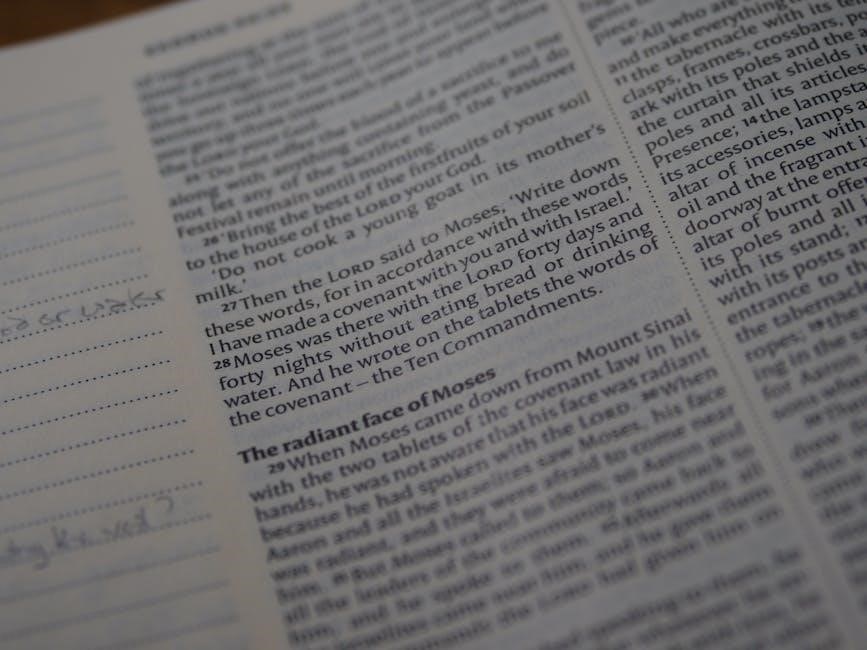
The Testament of Moses, frequently accessed as a PDF, dedicates significant portions to the momentous event of the Law’s delivery. These digital versions meticulously detail the setting on Mount Sinai and the dramatic theophany accompanying the Ten Commandments.
PDF analyses reveal expanded accounts beyond the biblical narrative, elaborating on the specific stipulations of each commandment and their implications for Israelite life. The text emphasizes the covenantal nature of the Law, portraying it not merely as a set of rules, but as a divine gift enabling a holy relationship with God. Studying these PDF copies illuminates the profound reverence with which Moses approached this sacred task, mediating between God and his people.
Theological Significance
The Testament of Moses, often studied via PDF, reveals profound theological themes. PDF analysis highlights its importance in understanding covenant theology and prophetic traditions.
Moses as a Prophetic Figure
The Testament of Moses, accessible through numerous PDF versions online, profoundly portrays Moses not merely as a lawgiver, but as a pivotal prophetic figure. Studying the text in PDF format reveals how Moses anticipates a future prophet – often interpreted as Jesus Christ – foreshadowing themes of redemption and divine intervention.
The PDF documents demonstrate Moses’s role extends beyond delivering the Law; he embodies a prophetic voice, communicating God’s will and offering insights into the future. His interactions with God, detailed within the PDF, establish a pattern of prophetic communication. Analyzing the PDF reveals Moses’s warnings, blessings, and predictions, solidifying his status as a key prophetic archetype within Jewish tradition and Christian theology.
Foreshadowing of Jesus Christ
Numerous PDF versions of The Testament of Moses highlight striking parallels between Moses and Jesus Christ. The text, readily available in PDF format, details Moses’s suffering and eventual glorification, mirroring aspects of Christ’s passion and resurrection. Scholars analyzing the PDF note Moses’s role as a mediator between God and the people, prefiguring Jesus as the ultimate mediator.
The PDF reveals descriptions of Moses’s humility and obedience, qualities also attributed to Jesus. Furthermore, the PDF’s account of Moses leading his people to the Promised Land symbolically anticipates Jesus leading believers to eternal life. These thematic resonances, easily examined within the PDF, contribute to the understanding of the Testament as a significant prefiguration of Christian messianic expectations.
Themes of Covenant and Redemption
Analyzing The Testament of Moses in PDF format reveals central themes of covenant and redemption. The PDF demonstrates God’s unwavering commitment to His people through a binding covenant, established with Moses. This covenant, detailed within the PDF, promises blessings for obedience and warnings against transgression, highlighting the reciprocal nature of the divine-human relationship.
The PDF further illustrates redemption as a core concept, showcasing God’s act of liberating the Israelites from Egyptian bondage. This act of liberation, thoroughly presented in the PDF, serves as a prototype for spiritual redemption offered through faith. Studying the PDF reveals how the Testament emphasizes God’s faithfulness in fulfilling His promises, solidifying the covenant and offering lasting redemption.
The Importance of Obedience and Faith
Examining The Testament of Moses in PDF form underscores the critical roles of obedience and faith. The PDF consistently portrays obedience to God’s commands as essential for receiving blessings and maintaining the covenant relationship. Disobedience, as detailed within the PDF, leads to consequences and a disruption of divine favor.
Furthermore, the PDF emphasizes faith as the foundation for experiencing God’s power and promises. Moses’ unwavering faith, vividly illustrated in the PDF, enabled him to lead the Israelites and confront Pharaoh. Studying the PDF reveals that true faith isn’t merely intellectual assent, but a confident trust in God’s character and provision, vital for redemption and covenant fulfillment.

The Testament of Moses PDF: Accessing Digital Copies
The Testament of Moses PDF versions are widely accessible through various online repositories and digital libraries, offering convenient study options for researchers.
Reliable Sources for PDF Downloads
Finding trustworthy sources for The Testament of Moses PDF requires careful consideration. Several online archives specialize in ancient texts and offer digitized versions. The Internet Archive is a prominent resource, often hosting scanned copies of historical documents, including potentially this text.
Academic institutions and theological libraries frequently provide access to digital collections. Websites associated with universities or research centers dedicated to biblical studies may offer downloadable PDFs. Project Gutenberg, while primarily focused on secular literature, sometimes includes religious texts in the public domain.
Be cautious of unfamiliar websites offering free downloads, as these may contain malware or inaccurate transcriptions. Always verify the source’s reputation before downloading any file. Checking for scholarly annotations or introductions can indicate a reliable edition.
Free vs. Paid Versions – What to Expect
Free PDF versions of The Testament of Moses are often available from online archives, but may lack scholarly apparatus. Expect potentially lower-quality scans or transcriptions, and limited introductory material or notes. These versions are suitable for casual reading or initial exploration.
Paid versions, typically offered by academic publishers or specialized theological websites, generally provide higher-quality scans, accurate transcriptions, and extensive scholarly commentary. These editions often include introductions, footnotes, and critical analyses, enhancing the reading experience and aiding in deeper study.
Consider your research needs when choosing. For basic access, free versions suffice; for in-depth analysis, a paid, scholarly edition is recommended.
Legality and Copyright Considerations
The Testament of Moses, being an ancient text, generally falls into the public domain. However, specific PDF versions may be subject to copyright based on the translator’s work or editorial additions. Always verify the source’s licensing terms before downloading or distributing any digital copy.
Reputable sources clearly state copyright status. Avoid websites offering PDFs with unclear origins, as these may infringe on existing copyrights. Utilizing PDFs from established academic publishers or well-known archives minimizes legal risks.
Respect intellectual property rights and ensure compliance with copyright laws when accessing and utilizing digital versions of this ancient text.
File Size and Compatibility
The Testament of Moses PDFs typically range in size from a few hundred kilobytes to several megabytes, depending on image inclusion and formatting. Most modern devices – computers, tablets, and smartphones – readily support the PDF format without requiring additional software.
Adobe Acrobat Reader is a free, widely-used application ensuring compatibility across platforms. However, web browsers often natively open PDFs. Ensure your browser is updated for optimal viewing.
Larger files with high-resolution images may take longer to download and open. Consider file size when accessing on limited bandwidth connections.
Analyzing the Text
The Testament of Moses, in PDF form, invites critical examination of its language, translations, and variations. Scholarly commentary enhances understanding of this ancient document.
Language and Translation Issues
The Testament of Moses, existing primarily in ancient languages, presents significant challenges for modern readers accessing PDF versions. Original texts require careful translation, impacting interpretation. Variations exist between different translations – Greek, Latin, and Slavonic – each influencing the nuances of meaning.
Scholars debate the precise meaning of certain phrases and concepts due to linguistic ambiguities and the historical context. PDF versions often rely on specific translations, potentially omitting alternative interpretations. Recognizing these translation issues is crucial for a comprehensive understanding of the text’s theological and historical significance. Careful comparison of multiple PDF versions, based on different translations, is highly recommended for serious study.
Critical Editions and Scholarly Commentary
The Testament of Moses, when accessed via PDF, benefits greatly from accompanying critical editions and scholarly commentary. These resources provide essential context, textual analysis, and historical insights. Critical editions, often available alongside PDF versions, present the original text with detailed notes on variant readings and textual uncertainties.
Scholarly commentaries, frequently found as supplementary PDF documents or linked resources, offer interpretations of key passages and themes. They explore the text’s relationship to other ancient Jewish literature and its theological implications. Utilizing these resources enhances understanding and allows for a more informed engagement with the complexities of the Testament of Moses.
Comparing Different Versions of the Testament
The Testament of Moses exists in several textual traditions, making comparison crucial when studying PDF versions. Variations arise from different manuscript families and translation choices. Examining multiple versions – Greek, Latin, Slavonic – reveals nuances in wording and interpretation, impacting theological understanding.
PDFs often represent specific editions based on these traditions. Scholars analyze these differences to reconstruct the original text and understand its evolution. Comparing translations highlights interpretive biases and allows readers to assess the accuracy and fidelity of each rendering. Accessing diverse PDF versions fosters a comprehensive and critical approach to this ancient text.

Related Texts and Apocrypha
The Testament of Moses shares thematic links with texts like the Book of Jubilees and the Assumption of Moses, often found alongside it in PDF collections.
Connections to the Book of Jubilees
The Testament of Moses exhibits compelling connections to the Book of Jubilees, particularly in its expanded retelling of biblical narratives and its focus on detailed chronological frameworks. Both texts, frequently available together in PDF compilations of ancient Jewish writings, demonstrate a shared interest in elaborating upon Pentateuchal stories.
Scholars note similar stylistic features and thematic concerns, such as the emphasis on angelic mediation and the importance of observing specific religious laws. Both works also present a heightened sense of divine judgment and the consequences of disobedience. Accessing PDF versions allows for direct comparison, revealing shared traditions and potential literary dependencies, enriching understanding of Second Temple Judaism.
Similarities with the Assumption of Moses
The Testament of Moses shares striking parallels with the Assumption of Moses, another pseudepigraphal work often found alongside it in digital PDF collections. Both texts focus on Moses’ final days and his divinely ordained transfer of authority to Joshua. They both expand upon the biblical account of Moses’ death, offering detailed visions and prophetic pronouncements.
A key similarity lies in their apocalyptic tone, depicting future tribulations and the ultimate triumph of righteousness. PDF versions facilitate comparative analysis, highlighting shared motifs like the lament over Israel’s future apostasy and the anticipation of a messianic figure. These texts provide valuable insights into Jewish eschatological beliefs.
The Place of the Testament of Moses in Pseudepigrapha
The Testament of Moses firmly resides within the body of Jewish Pseudepigrapha – ancient writings attributed to biblical figures but not included in the canonical scriptures. PDF versions of this text are frequently studied alongside other works like Jubilees and Enoch. Its pseudepigraphic nature means it offers a perspective about biblical events, rather than being a direct continuation of scripture.
Scholars categorize it based on its literary style and theological themes. Accessing digital PDFs allows researchers to compare its unique characteristics with other pseudepigraphal texts, illuminating the diversity of Jewish thought during the Second Temple period. It provides context for understanding early Christian interpretations.

Practical Applications & Study Resources
PDF access to The Testament of Moses enhances biblical study, offering insights into Second Temple Judaism. Online forums and research tools aid deeper exploration.
Using the Testament of Moses for Biblical Study
The Testament of Moses, accessible through readily available PDF versions, serves as a valuable supplementary text for enhanced Biblical understanding. Studying this ancient work alongside canonical scriptures illuminates Second Temple Jewish thought and provides context for New Testament themes.

Researchers and students can analyze its unique portrayal of Moses, the Exodus, and the Law, comparing it to traditional narratives. Examining the text’s literary style and theological emphases—covenant, obedience, and foreshadowing—deepens interpretive insights. Digital access facilitates convenient textual analysis and cross-referencing with other ancient sources like the Book of Jubilees and the Assumption of Moses, enriching scholarly pursuits and personal devotion.
Resources for Further Research
Delving deeper into The Testament of Moses requires exploring specialized academic resources. Online databases like JSTOR and Academia.edu host scholarly articles analyzing the text’s historical context and theological significance. Accessing PDF versions of critical editions, complete with detailed commentaries, is crucial for nuanced understanding.
Websites dedicated to Pseudepigrapha and Second Temple Judaism offer valuable insights. Engaging with online forums and communities fosters discussion and collaborative learning. Books focusing on Moses, the Exodus, and Jewish literature of the period provide broader contextualization. Remember to consult reputable sources and critically evaluate different interpretations for a comprehensive research experience.
Online Forums and Communities
Exploring The Testament of Moses benefits greatly from engaging with online scholarly communities. Dedicated forums and discussion boards provide platforms to exchange interpretations and ask questions about the PDF text. Websites like Reddit host subreddits focused on biblical studies and ancient texts, offering diverse perspectives.
Facebook groups centered on Apocrypha and Pseudepigrapha can connect you with fellow enthusiasts. These communities often share resources, translations, and critical analyses. Participating in respectful dialogue enhances understanding and reveals nuances often missed in solitary study. Remember to verify information and approach discussions with a critical mindset.

Legal Definitions of “Testament” (Related Terminology)
Testament legally signifies a document detailing property distribution after death; however, in religious contexts, it denotes a covenant or divine promise.
Testament as a Legal Document
Legally, a testament—often synonymous with a “will”—is a legally binding declaration outlining how an individual’s assets and property should be distributed following their death. This crucial document ensures the testator’s wishes are honored, preventing disputes among potential heirs.
Requirements for a valid testament typically include being of sound mind, reaching a legal age, and adhering to specific formatting guidelines, often necessitating witness signatures. German law features the “Berliner Testament,” a joint will common among spouses.
Unlike the ancient religious Testament of Moses, which conveys spiritual truths, a legal testament focuses on earthly possessions and inheritance laws, providing a framework for orderly transfer of wealth and property.
Wills and Inheritance Laws
Wills, formal testaments, are central to inheritance laws, allowing individuals to dictate asset distribution post-mortem. Without a will, inheritance defaults to statutory rules, potentially diverging from the deceased’s desires. These laws vary significantly by jurisdiction, impacting who inherits and how much.
The Testament of Moses, while a historical religious text available in PDF form, differs fundamentally from legal wills. It’s a spiritual writing, not a document governing property. However, understanding historical legal contexts illuminates societal views on legacy.
German inheritance law includes the “Berliner Testament,” a specific joint will format. Careful estate planning, including a valid will, is crucial for a smooth transfer of assets and minimizing legal complications.
Berliner Testament (German Legal Context)
The Berliner Testament, a joint will common in Germany, differs drastically from the ancient Testament of Moses, available digitally as a PDF. While the former dictates asset distribution upon death, the latter is a religious text offering theological insights.
This German legal instrument requires precise drafting, typically involving both spouses mutually agreeing on inheritance allocation. It avoids immediate inheritance by the surviving spouse, instead designating heirs directly. Understanding its nuances is vital for international estate planning.
Despite the shared term “testament,” the contexts are worlds apart – one legal, the other religious. Accessing the Testament of Moses PDF provides historical context, but not legal guidance on German inheritance.